
Plants provide food, medicine, shelter, and the oxygen we need to breathe. In fact, everything we eat comes directly or indirectly from plants. Herbivores (plant eaters) and
omnivores (animal and plant eaters) depend of plants for survival. Even carnivores
(meat eaters) depend on plants because they often prey on animals that eat plants.
Plants also provide shelter and habitats for many animals.
The basic parts of most land plants are roots, stems, leaves, flowers,
fruits, and seeds. The function of each plant parts is described below.

Roots anchor the plants in the soil and absorb nutrients and water that are needed by the rest of the plant.
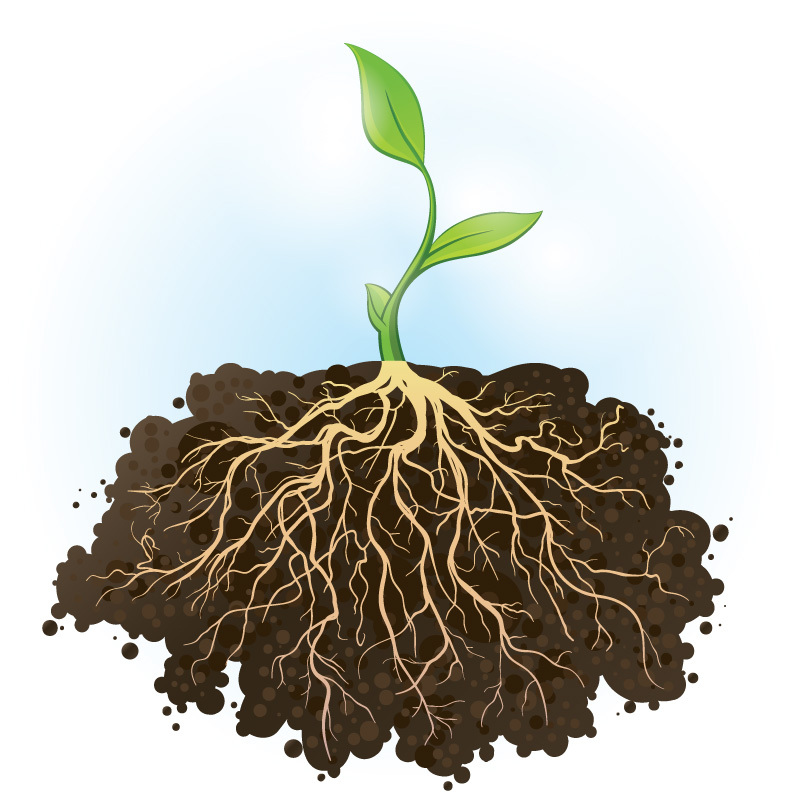
Stems support the upper part of the plant and act as a transport system for nutrients, water, sugar, and starches.

Leaves are the parts of the plant where photosynthesis usually occurs—where food for the plant is made.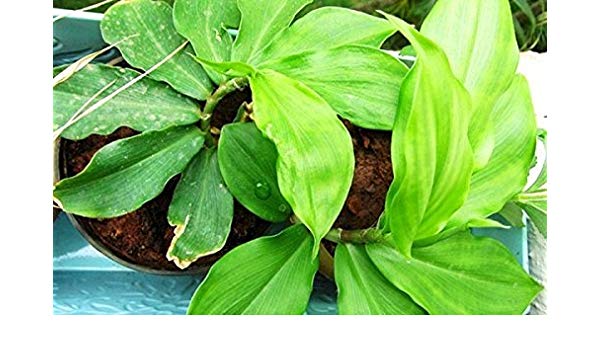
Flowers are the reproductive part of plants. They often have showy petals and fragrances to attract pollinators such as birds, bees.
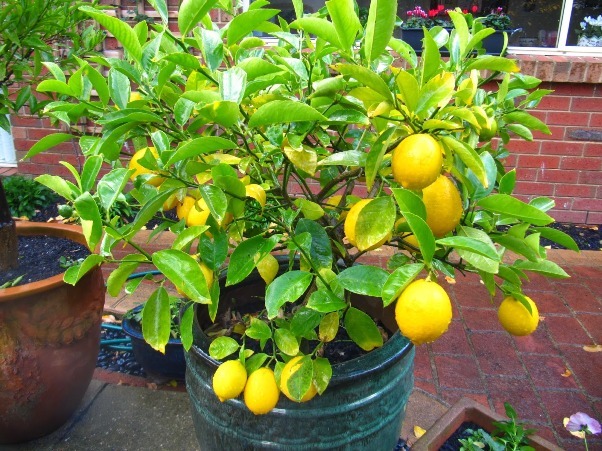
Fruits are the fleshy substances that usually surround seeds.They protect the seeds and attract animals to eat them.
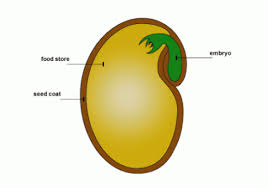
 Seeds contain plant material that can develop into another plant. This plant material is called an embryo. Seeds are covered with a protective seed coat and have one or two cotyledons.
UNIT PLAN FOR GRADE 3 SCIENCE
UNIT AUTHOR
Ezra P. Celi

zeemae23@gmail.com

Educational Technology 2

School of Teacher Education and Liberal Arts

Saint Louis University, Baguio City

Professor: Wilfredo Bambico, Ph.D
→ESSENTIAL QUESTION: Do plants need water in order to grow?

→UNIT QUESTIONS: How will life survive without plants?

What do plants need in order to grow?

What are the basic needs of a plants?
UNIT SUMMARY
In this lesson, third grade students learn the basic functions and cycle of a plant and recognize their importance (flower, stem, seed, leaf, and roots). The lesson will provide students the opportunity to review parts of a plants.
LEARNING OUTCOMES
Through this unit plan the pupils should be able to:
- The learner identifies the parts of plants and their functions.
- The learner describes the plant cycle.
- The learner state the importance of plants to humans.
TARGETED STATE FRAMEWORKS
Content Standards
- The students should be able to demonstrate understanding of the external parts of plants and their functions.
Performance Standards
- The students should be able to demonstrate proper care of plants used for food, and sources of materials and other by products.
Learning Competencies
- Identifies the parts of plants and their functions.
- Describes the cycle of plants.
- State importance of plants to humans.
UNIT PROCEDURE
Day 1:
- Prayer (2 minutes)
- Motivation: “Arrange Me” Flash a pictures and a jumbled letters let them arrange the jumbled words. (10 minutes)

- “Riddle Time” Pose a riddle let the student think about the riddle, When someone get the answer on the riddle give them a star. (5 minutes)
- TRIVIA TIME: “DID YOU KNOW THAT?” Give a trivia about the topic about plants (3 minutes)
- Give the objectives of the lesson
- Presentation: Through the use of power point presentation , Discuss properly what plants can do to our environment. (20 minutes)
Day 2:
- Prayer (2 minutes)
- Recall: Have a short recall on the past discussion. (10 minutes)
- Pose the essential question/ thought provoking question. (2 minutes)
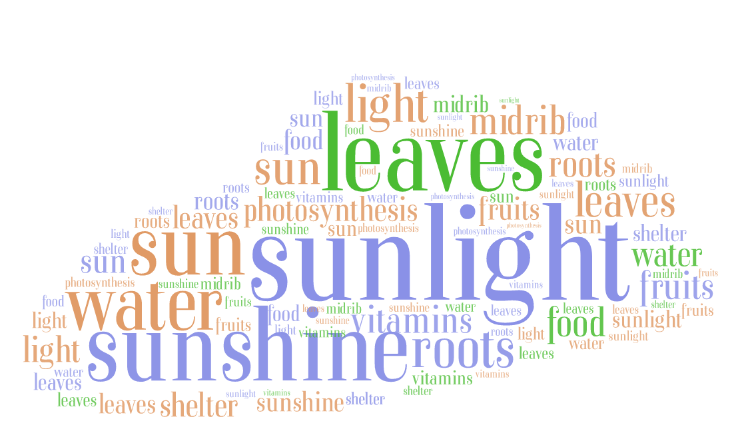
- WORD SALAD: Let them write all their thoughts on a word salad form. (5 minutes)
- Continue the topic by introducing the different parts of plants. ( 15 minutes)
- Before the class ends, Give the summary of the lesson. (6 minutes)
- QUIZ TIME!: Give a 10 points True or False quiz. (10 minutes)
Day 3:
- Prayer (2 minutes)
- Recall: Have a short recall on the past discussion (10 minutes)
- Presentation: Nature Walk: Take the students outside the school garden, and let them observe the environment. (20 minutes)
- QUIZ TIME!: ESSAY: Pose the questions: (10 minutes)
- How will life survive without plants?
- What do plants need in order to grow?
- What are the basic needs of a plant?
- ASSIGNMENT: Group the students into five groups, Let them discuss and task them to make a newsletter based from their observation on (cleanliness and beautification) of the school garden. (10 minutes)
(See Activity Links for sample output)
Day 4:
- Prayer (2 minutes)
- Motivation: Present a picture of a clean environment and let them describe what is in the picture. (10 minutes)
- Presentation: Discuss the importance and function of the plants to our environment. (20 minutes)
- ACTIVITY TIME: Group the students into five groups, Let them create a comic strip showing their care to the environment. (20 minutes)
(See Activity Links for sample output)
Day 5:
- Prayer (2 minutes)
- REVIEW: Short recall on the past discussion about parts, importance and functions of plants to environment and humans. (20 minutes)
- GROUP WORK: Divide the class into 5, Task them to create a tri-fold brochure about Importance of Plants to Environment for their Environmental Week. (30 minutes)
(See Activity Links for sample output)
Day 6:
- Prayer (2 minutes)
- Summative Quiz based on the lesson (30 minutes)
- Based from the previous lesson, Create a student multi-media presentation showcasing our lesson “Parts of the Plants” (30 minutes)
INTERNET RESOURCES:
Fun Facts For Kids on Animals, Earth, History and More
https://www.dkfindout.com/us/animals-and-nature/plants/parts-plant/
http://marinmg.ucanr.edu/files/187894.pdf
ACCOMMODATION FOR DIFFERENTIATED INSTRUCTION
Resource Students: Bring the class together and discuss with the entire class.
Gifted Students: Work together, bounce ideas off one another and take a peer’s idea to a new place.
 SCIENCE FOR YOU AND ME!